
The 2026 State of Digital Business in Western North Carolina
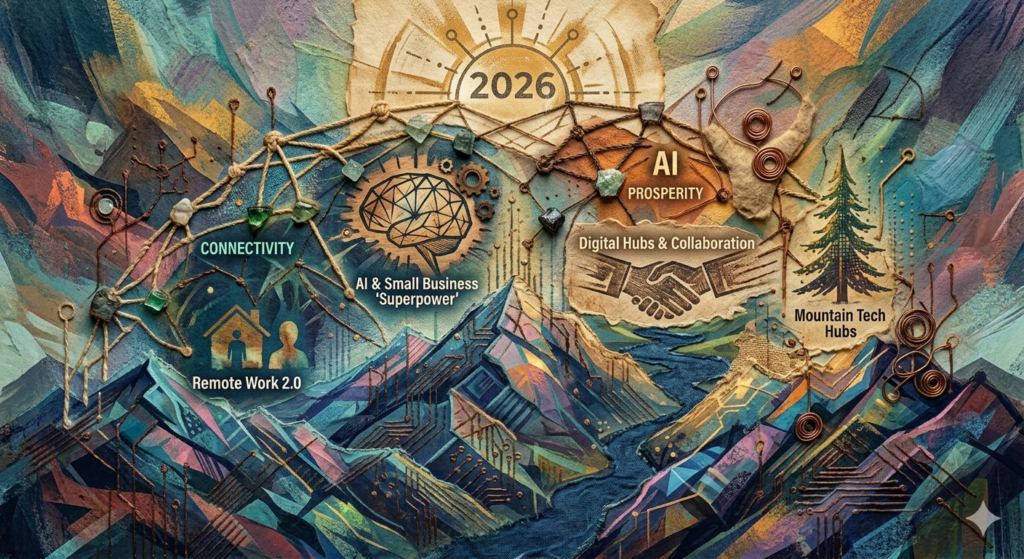
In the rolling landscapes of the Blue Ridge Mountains, a quiet revolution has reached its crescendo. As of 2026, Western North Carolina (WNC) has officially transitioned from a region defined solely by its natural beauty and traditional tourism into a burgeoning hub for the “Mountain Tech” economy. The state of digital business in WNC today is characterized by radical connectivity, the democratization of Artificial Intelligence, and a resilient entrepreneurial spirit that has survived both economic shifts and the long tail of disaster recovery.
The Connectivity Breakthrough
The most significant shift in 2026 is the completion of massive broadband infrastructure projects. Following years of state-led initiatives, such as the Stop-Gap Solutions program, high-speed fiber and low-latency satellite internet have finally penetrated the “deep coves” and rural ridges.
- Remote Work 2.0: With gigabit speeds now standard in counties like Madison, Mitchell, and Yancey, Asheville’s status as a “zoom town” has expanded into a regional identity. Professionals are no longer tethered to downtown hubs; they are launching global digital consultancies from renovated farmhouses in Marshall and Waynesville.
- Infrastructure for Growth: This connectivity is the bedrock of the 2026 economy, allowing local artisans and manufacturers to move from local craft fairs to global e-commerce platforms with seamless logistics integration.
AI and the Small Business “Superpower”
In 2026, Artificial Intelligence is no longer a luxury for Silicon Valley; it is the “Swiss Army Knife” of the WNC small business owner. Data shows that over 80% of small businesses in the region now utilize generative AI for daily operations—from automating inventory for boutique hotels in Highlands to managing multilingual customer service for Asheville-based software startups.
| Sector | 2026 Digital Integration Trend |
| Hospitality | AI-driven dynamic pricing and hyper-personalized guest itineraries. |
| Agriculture | IoT sensors and data analytics for “smart farming” in the French Broad Valley. |
| Creative Arts | Blockchain-based provenance for local art and digital NFT marketplaces. |
The Rise of “Mountain Tech” Hubs
Asheville continues to anchor the region, but 2026 has seen the rise of secondary digital hubs. Sylva and Boone have leveraged their university connections (WCU and Appalachian State) to create incubator spaces focused on ClimateTech and AgTech. These hubs are attracting “climate migrants”—tech workers looking for a sustainable balance between a high-growth career and environmental stewardship.
Challenges and the Path Forward
Despite the optimism, the 2026 digital landscape faces hurdles. Cybersecurity remains a critical vulnerability, as small businesses often lack the robust defense systems of larger corporations. Furthermore, while the digital divide is closing in terms of hardware, a “skills gap” persists. Institutions like A-B Tech have become vital, ranking top in the nation for workforce development by pivoting their curriculum toward AI management and digital ethics.
Ultimately, the state of digital business in Western North Carolina is one of harmonious duality. The region has proven that it is possible to maintain a rugged, outdoor-centric culture while leading the charge in the digital-first economy of the mid-2020s. For the WNC entrepreneur in 2026, the office isn’t just a desk—it’s the entire mountain range.