
5 Reasons Asheville Startups are Switching to Custom Web Apps in 2026
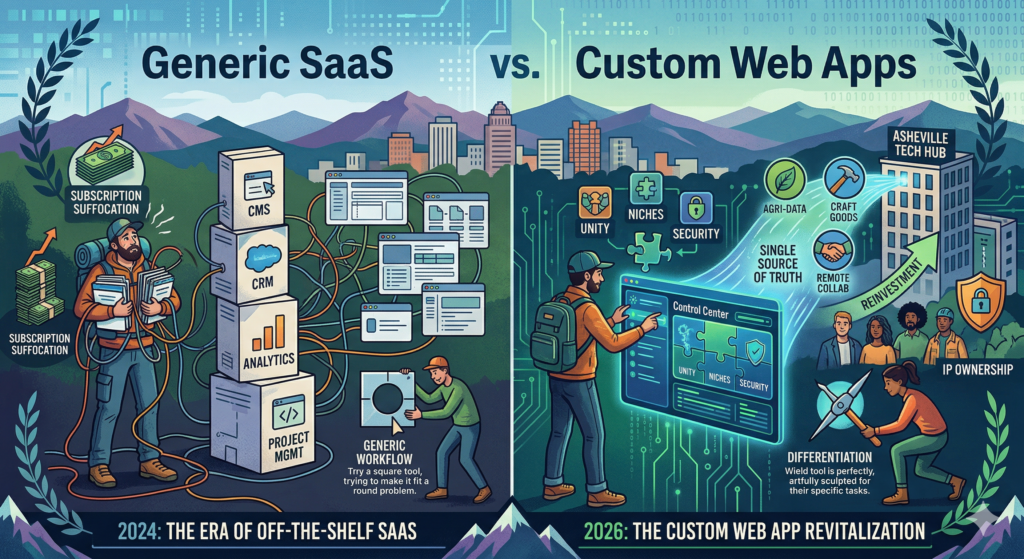
Asheville has long been celebrated for its “Craft and Code” culture, but in 2026, the local tech scene is undergoing a fundamental shift. While the city’s startups—ranging from climate-tech innovators like Earth Thrive to health-tech leaders like Alto Pharmacy—once relied on a patchwork of subscription-based Software as a Service (SaaS) tools, a new trend has emerged.
Founders are increasingly abandoning “off-the-shelf” solutions in favor of custom-built web applications. Here are the five key reasons why Asheville’s entrepreneurial ecosystem is making the switch this year.
1. Escaping “Subscription Suffocation”
By 2026, the average startup is managing over 20 different SaaS subscriptions. For a lean Asheville team, the “per-user” pricing models of 2024 and 2025 have become a scaling tax. As companies grow from 10 to 50 employees, their software overhead explodes. Custom web apps offer a one-time investment model. By owning the intellectual property, local startups are eliminating monthly licensing fees, allowing them to reinvest that capital into Mountain South talent rather than Silicon Valley recurring revenue.
2. Radical Integration for Hybrid Work
Asheville’s workforce is uniquely distributed, with many professionals balancing time between downtown coworking hubs and remote mountain retreats. Generic software often creates “data silos” where information gets trapped in separate apps. Custom web apps allow startups to build unified dashboards that integrate their specific CRM, project management, and specialized local logistics into a single interface. This “single source of truth” reduces the friction of hybrid work, which is essential for the city’s collaborative culture.
3. Niche-Specific Functionality
The 2026 Asheville startup is rarely “generic.” Whether it’s an AI-driven reforestation platform tracking carbon sequestration or a blockchain-based art market for the River Arts District, these businesses have unique logic that standard software simply can’t handle.
- Customization: Tailoring the UI to match specific mountain-sector workflows.
- Automation: Building proprietary algorithms directly into the web app to handle niche data, such as local agricultural metrics or tourism trends.
4. Enhanced Security and Compliance
As North Carolina becomes a national leader in tech—boasting the #1 spot for tech occupation growth in 2026—the stakes for data security have never been higher. Standard SaaS platforms are high-value targets for hackers. By building custom applications, Asheville startups can implement bespoke security protocols and ensure they are fully compliant with specialized industry regulations (like HIPAA for the region’s growing telehealth sector) without paying for the “Enterprise” tier of a generic provider.
5. Competitive Differentiation in a Crowded Market
In a world where every competitor has access to the same tools, your software can be your greatest “moat.” Asheville founders are realizing that using the same CRM as everyone else makes it hard to stand out. A custom web app allows a startup to offer a unique user experience (UX) that competitors cannot replicate. Whether it’s a more intuitive client portal or a faster checkout process for craft goods, the “custom” label has become a mark of a mature, serious business in the WNC mountains.
The Bottom Line: In 2026, the transition from SaaS to custom web apps isn’t just a technical choice; it’s a financial and strategic one. For Asheville’s “scrappy and sophisticated” startups, building their own tools is the ultimate way to ensure their technology is as unique as the city itself.